Sulfur
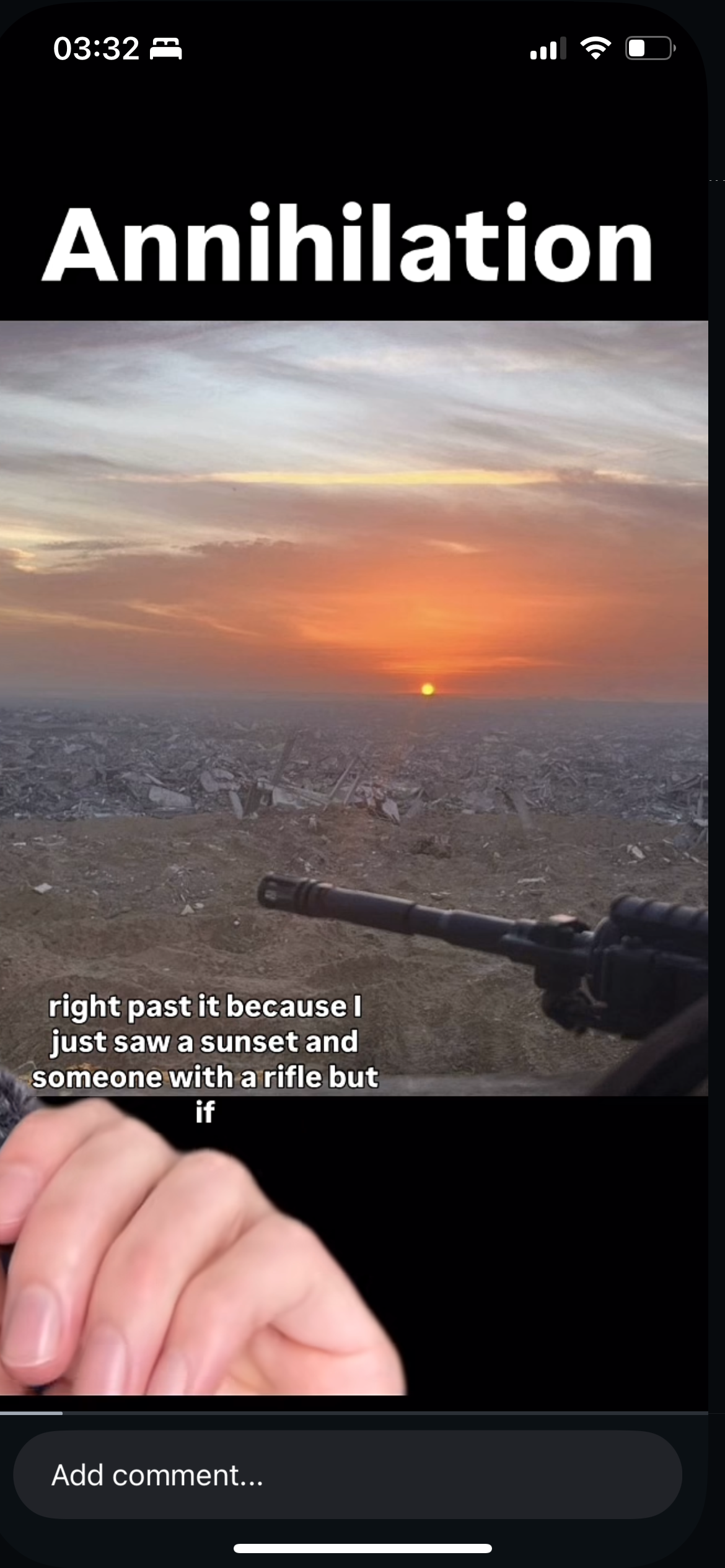
I saw this photo a couple of months back, while scrolling through my YouTube feed. Let me tell you a little bit about it.
In Islam, we have this concept of Judgement Day, where all of mankind is gathered at the Levant to be judged by God.
It is said that: the sun shall be darkened, the stars shall be thrown down and the seas shall be set boiling. When heavens shall be stripped off and Hell shall be set blazing, shall a soul know what it has produced. The soul shall bare to all its actions, its intentions, its dreams.
But looking at this endless grey rubble stretching to a smeared horizon, a single rifle barrel creeping into the frame - I wonder if we're not waiting for some distant apocalypse. Perhaps we have put ourselves in Hell early, willingly, and the devils are taking notes.
I talk a lot to my friends and family about dreams. I think we all do. As kids, we are asked what we want to be when we grow up. What our dreams are, why we have those dreams.
I often think about the power of a dream. How one's dreams have power— brimming, limitless power. Our ambitions can drive us to sleepless nights, physical toil and mental pressure. Dreams are really powerful.
Sometimes, dreams are so powerful that they extinguish other dreams. I think about the dreams of men and women who come to our shores to work. Often, their dreams are to feed hungry mouths back home. A simple dream of freedom from hunger, from fear, from the oppressor's boot. A familiar dream, perhaps from our own households here in Singapore.
That rifle barrel doesn't belong to a monster. It belongs to someone who had a dream too. Maybe to be a doctor, a farmer, a father. But somewhere along the way, the dream narrowed. Became a vengeful sightline. Became the dream of a colonist, the dream to bury a people and their history.
Under twelve feet of pulverized concrete and rebar, lies Sahar. Sahar's bones are shattered. Sahar's ligaments are distended. Sahar's dream was probably small. A nice school bag. A school that isn't a crater. To see her grandmother, Shahd, again.
Oh what a dream! A life of joy and play. Screaming her lungs out. Falling down. Getting back up. Dusting her knees off. Saying "I love you, baba!". Struggling to stay awake through bedtime stories to hear the end of it.
We buried Sahar and her dreams months ago. She's somewhere in that picture. What was her last dream you think?
Maybe it was just to see tomorrow's sunset. A beautiful sunset. Not for any flag or God. Just because sunsets used to be beautiful there too in Palestine.
Some dreams are better than others, some will say. Some will say, that these dreams got what they deserved. Some dreamers only dream for themselves. Of the grand palaces they will live in. What other dreams could possibly be as important anyway?
We are all dreamers.
Yet, who dreams of what we did here in Gaza? In Lebanon? In Syria? In Sudan? In Congo? In Iran? In Iraq? In Vietnam? In Myanmar? In Xinjiang?
We're all in Hell, and all anyone talks about are the gas prices.
We're all in Hell, and actually—let me check how my portfolio's doing. I bought some Palantir recently because of the dip.
We're all in Hell, and the men in three-piece suits get more worked up about my thoughts on their genocidal partners than their endless genocides and wars.
We're all in Hell, and the Internet personas are debating universal human rights for clips, TikTok edits and sound bytes.
We're all in Hell, and we managed to turn human empathy into coloured, religioned and classed empathy.
We're all in Hell, and the devils are taking notes.
The Syrian poet Al-Ma'arri wrote his own epitaph a thousand years ago. It says:
"This is my father's crime against me,
which I myself have not committed."
He meant: I did not choose to be born into a world that taught my hands how to hold a grudge. And yet here I am, inheriting the blade.
Sahar did not choose her rubble. The soldier did not fully choose his rifle. But somewhere between their two births, a generation of dreamers chose to sleep through the warning signs. For dreams have power—the power to build, and to decimate.
Al-Ma'arri also said: "Do not suppose the statements of the prophets are true — they are all corrupt." Much like Nietzsche, Al-Ma'arri wasn't rejecting God, but instead the men who use God to justify the next grave.
Who will write Sahar's epitaph? Not the prophets. Not the generals. Just us, standing in Hell, pretending we smell nothing.
The sulfur doesn't smell too bad down here anyway.